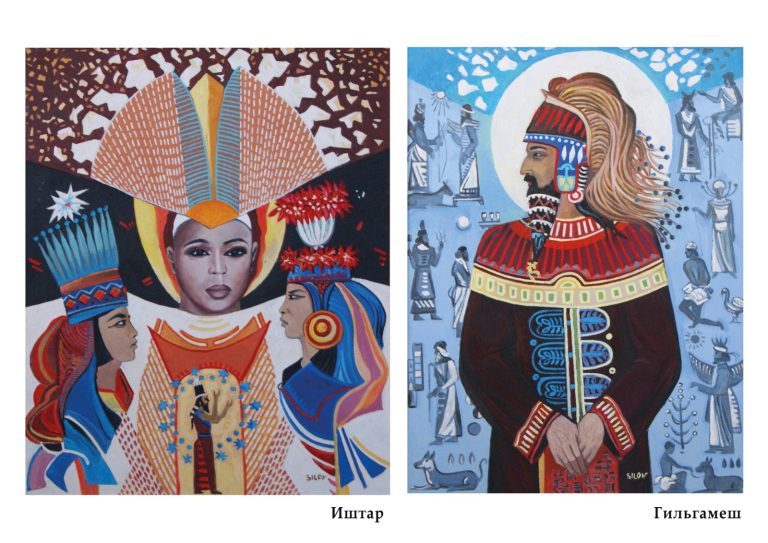
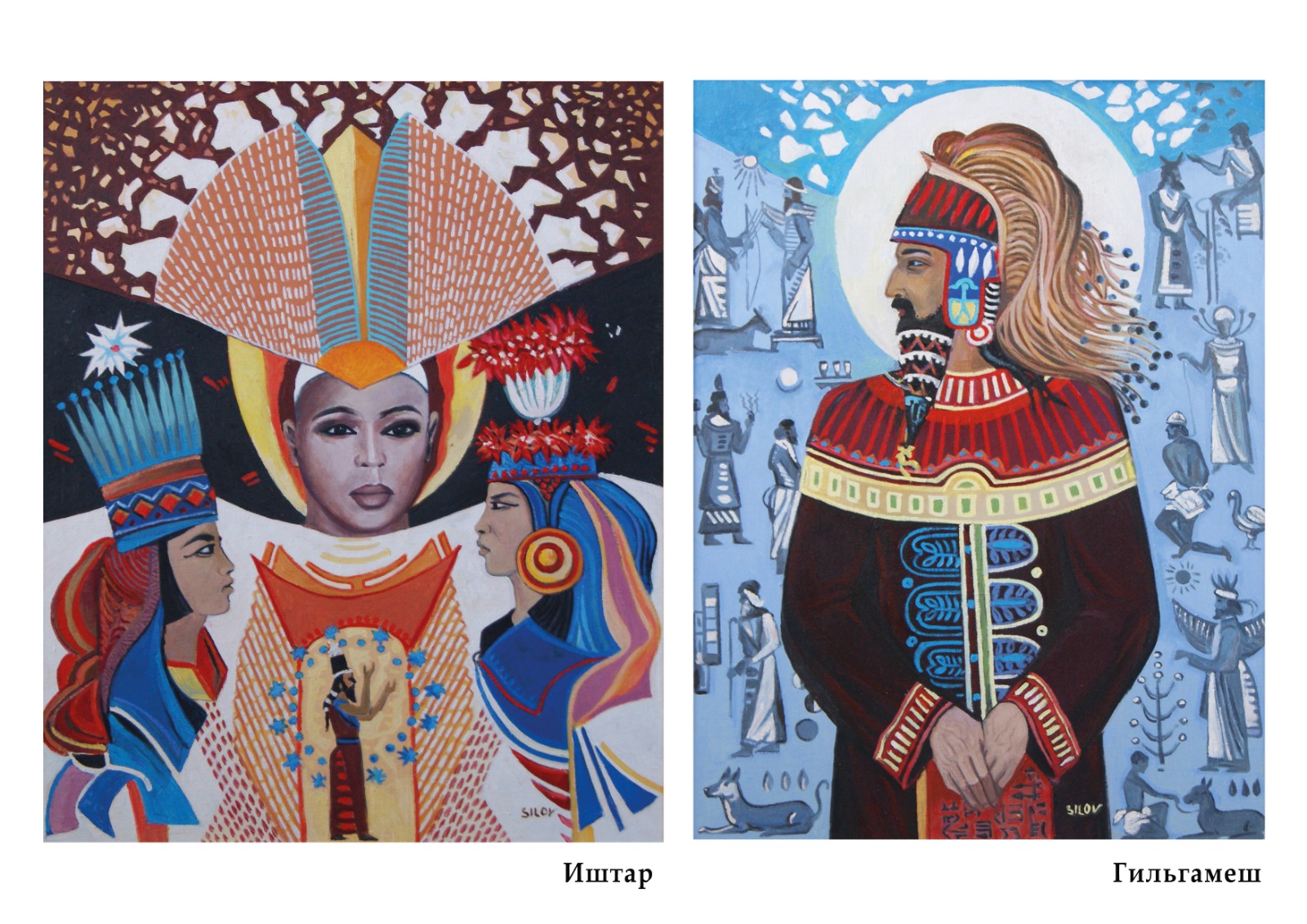
ISHTAAR – the main female deity of the Mesopotamian (Sumerian-Akkadian) pantheon, goddess of fertility, love, war and strife. Sometimes she was also credited with the gift of healing. Women relied on her help during childbirth.
Ishtar is one of the most revered and beloved goddesses of Mesopotamia, both by gods and humans. She was a beautiful, intelligent, cunning and very headstrong goddess, worshipped not only in Mesopotamia but also in neighbouring lands. She was originally the female patron deity of the city of Uruk.
Later, her cult spread throughout Sumer, Akkad, Assyria and Babylon.
Ishtar has many names: Ishtar in Sumer, Inanna in Akkad, Assyria and Babylon, Astarte in Babylon and Phoenicia, Anahit among the Hittites and Hurrians, Cybele in Phrygia, and in antiquity – Aphrodite and Venus.
Ishtar was called ‘lady of heaven and earth,’ ‘lady of heavenly light,’ ‘lady of countries,’ ‘lady of armies,’ etc.
Gilgamesh was the ruler of the Sumerian city of Uruk, who reigned around the 27th century BC. He became a character in Sumerian legends and the Akkadian epic. In some myths, he is known as ‘Gilgamesh, King of Heroes.’ According to legend, after his death, Gilgamesh became the ruler of the underworld.
Historians believe that it was Gilgamesh, the most famous hero of Sumerian myths, who served as the prototype for such ancient characters as Heracles, Hercules, and even Saint George. The first mentions of Gilgamesh date back to the third millennium BC — a hero with this name is described in an Akkadian poem. (Akkad was a state that existed between 2200 and 2400 BC in the region of Mesopotamia, bounded by the Tigris and Euphrates rivers, in what is now Iraq). This is where the oldest human civilisation originated, from which Babylonia, Assyria and the Sumerian-Akkadian Empire grew. The latter was considered the benchmark for ancient monarchical states.
About the Author